🧘🏻♂️ I’ve put on a few pounds as I’ve worked through different medications for my OCD. This is a great reminder to not let myself get too focused on that. From my Daily Calm

🧘🏻♂️ I’ve put on a few pounds as I’ve worked through different medications for my OCD. This is a great reminder to not let myself get too focused on that. From my Daily Calm

There are enough times when “How are you?” comes from someone for whom “Good to see you” is not the correct response to merit further consideration.
A couple weeks ago, I shared my thoughts on the common greeting, How are you? In that article, I expressed my displeasure with this question, particularly as someone who struggles with mental health. My reply of choice was to sidestep the question and neither answer truthfully nor lie, and simply state, “Good to see you.”
Since that time, I have noticed a number of occasions when even this is not appropriate. One of the most common of these situations for me has occurred while shopping. Since I have been on a healing retreat the past couple weeks, I have not interacted with friends and colleagues as often. I have been surprised at how often I am still confronted with this personal question from complete strangers.
When I do not know the person at all, responding with, “Good to see you” is not appropriate. Partly it sounds weird, but mostly it simply is not true. Most of the time, I would be much happier if I could shop efficiently and effectively without speaking with anyone.

So I have taken a new approach in these situations. When someone greets me, “How are you?” I simply respond, “Thank you.” Often it’s followed with a question that I actually have, such as the location of a specific item.
I have found some interesting reactions to my “thank you” response. Most of the time, people just continue on without missing a beat. We have merely exchanged polite niceties and can now continue with our information transaction. Occasionally, an observant person will be a bit taken aback that I have not answered the question. And my favorite has been a response back of, “Fine, thanks.” There is an assumption that not only did I answer the question, but I asked a similar one in return.
This new approach of mine has done a couple things for me.
First, it has reminded me of how little people actually listen. This is hard for me to stomach, and is part of the reason I had to come up with an alternative response in the first place. What I say impacts me much more than most people with whom I interact.
Second, this has resolved a further point of distress. It has enabled me to move more gracefully through social interactions that might otherwise be awkward or painful.
This may or may not be the right approach for you to take. I encourage you to explore your responses to common situations and evaluate whether any change is needed. Most importantly, I urge you to consider no longer throwing away personal questions as greetings. Save them for the people who matter the most to you, and then care enough to get a real answer.
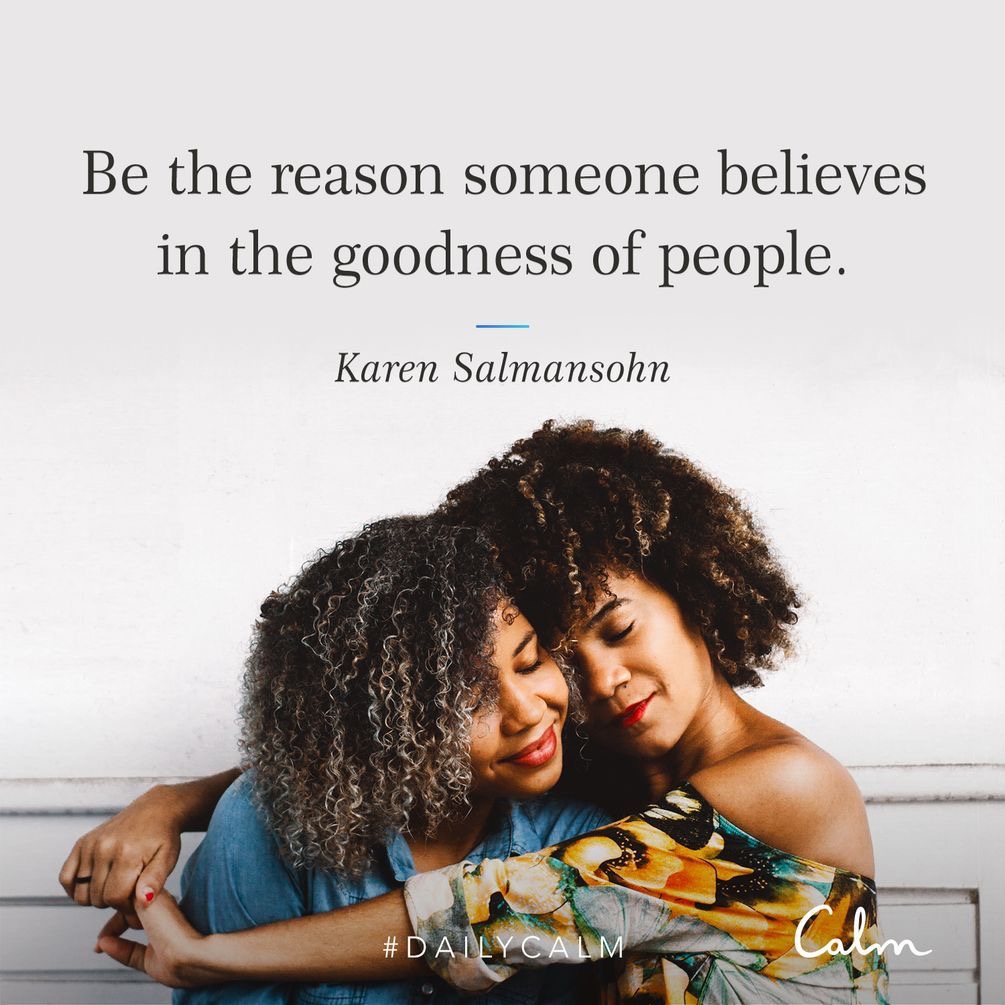
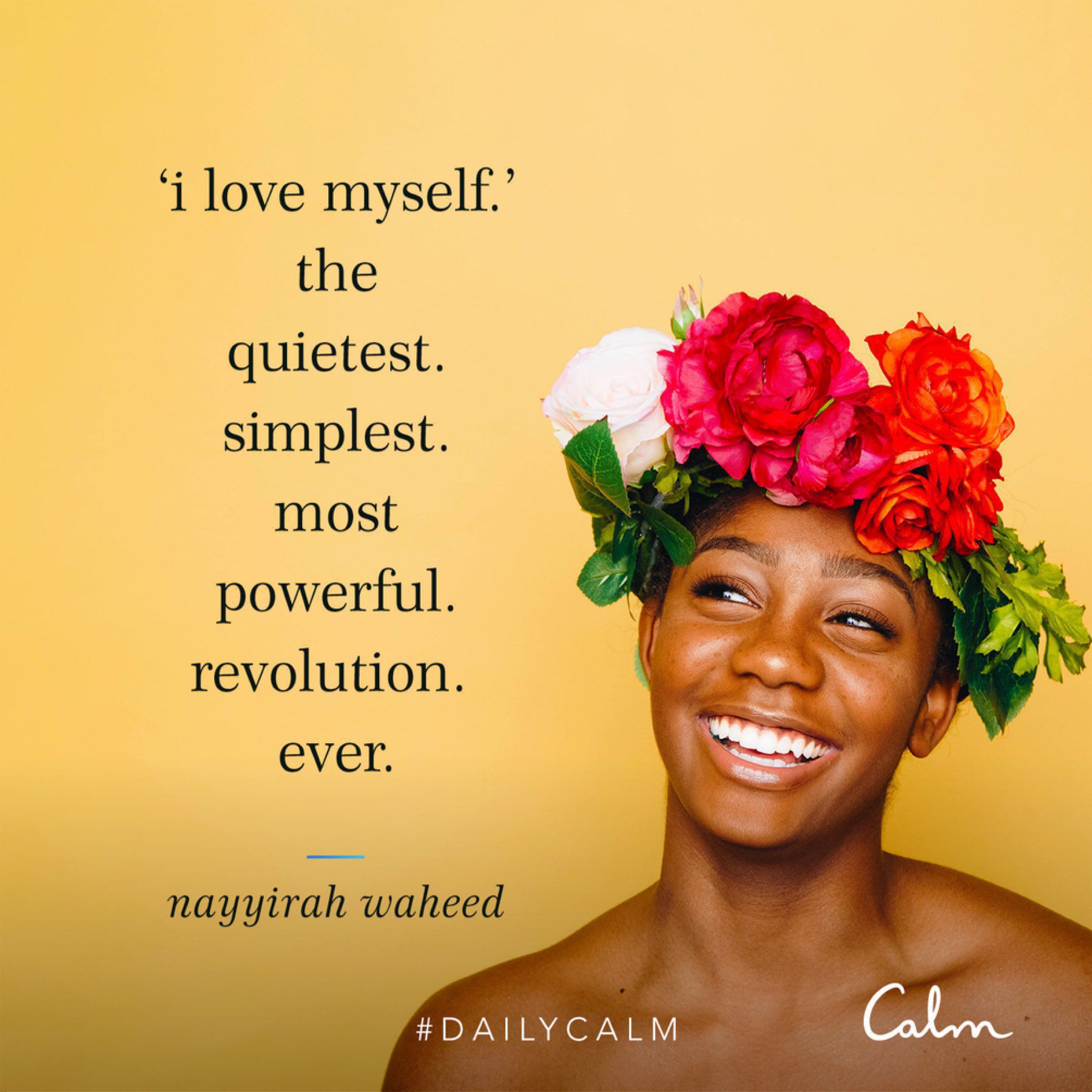
🧘🏻♂️ It is surprising how difficult it can be to love yourself and treat yourself kindly. Try to say words to yourself that you would say to a beloved friend. From my Daily Calm
🧘🏻♂️ This is true even (or especially!) when the invitations come from my own mind. I still have a choice. I am in control. From my Daily Calm
Back home from my healing retreat. It’s been fun to see how excited my kids are for me to be home. So much love. 🥰
🧘🏻♂️This is appropriate as I was traveling this morning and didn’t get to do my usual morning meditation until afternoon. It is still possible to seize the opportunities of today, even if those are just to relax. From my Daily Calm


Instead of ordering the best value, order the size you actually want.
I imagine that my experience is similar to yours. When I go to order food, I am mentally doing a quick calculation between the different sizes to identify the best value. If 20oz is only 50¢ more than 16oz, it is nearly impossible to order the smaller size. Even when I actually want the smaller size.
This leads to many different problems. Instead of being satisfied with my order, I have to choose between eating to discomfort, or grappling with the feeling of having wasted food. Often times, I will eat more than I wanted so that I am taking full advantage of the great value that I got.

I remember a particularly poignant example of this when eating at Smashburger one day. They were having a promotion on the Triple Double which made it even cheaper than the regular burger. I did not actually want that much meat, but I felt compelled to order the bigger burger for cheaper. My friend came behind me and ordered the same burger, but asked for only a single hamburger patty. I was struck by the brilliancy of his solution. That had never even crossed my mind.

As I have been on my healing retreat, I have seen a few movies in the theater. I used this as an opportunity to practice the new approach I wanted to take. It is a real challenge for me to pay $4 for a smaller bucket of popcorn, when the large is $5 and comes with a free refill. The thing is, I can never eat that much popcorn without getting sick. So I have forced myself to order the smaller size and stop worrying about the value I am missing out on. And I have enjoyed my movies much more with just the right amount of popcorn.
There are many situations in life when we make choices based on the perceived value of the options. Instead, we need to become more comfortable with ourselves, and more aware of our desires. And then be willing to act based on what we actually want, not what we think we should want. This is a much happier, and more comfortable, way to live.
When gratitude is trivialized too often and too thoughtlessly, we run the risk of discouraging it to the point where it stops altogether.
As I have been in Mexico, I have noticed an interesting linguistic phenomenon. By far, the most common response I’ve noticed to someone expressing gratitude is, „De nada.” I’m sure there are part of the U.S. where “No problem” or “It’s nothing” are the most common responses to “Thank you” as well, so this is nothing of a cultural indictment. But it got me thinking.
I wrote recently about trivializing apologies. The fact that we do that feels more explicable to me than our tendency to do the same with gratitude. With an apology, we at least might be seeking to extend mercy or uplift the other person.
However, when we trivialize gratitude, I think we do it thoughtlessly, even without realizing it. Just as with personal questions masquerading as greetings, we can fall into the trap of using societal niceties without considering what they actually mean, or the effect they might have.
Perhaps this will be easier to understand when we stop to think more about what is actually happening when someone expresses gratitude. Of course, there are thoughtless “Thank you”s bandied about, and they can muddy the waters. But typically when someone expresses appreciation, it represents a moment of vulnerability. They are self-aware enough to notice feelings of respect, admiration, or gratitude, and they are opening themselves up to expressing those emotions. It is often not easy to share our true emotions, and if sharing is not met with gentleness, it can be truly painful.
When we respond to appreciation with phrases such as, “Oh, it was nothing,” or, “No problem at all,” we are probably trying to be modest. We don’t want to appear conceited, and somehow believe that if we validate what the other person is saying, we will be perceived as arrogant enough to assume that what we did was important and merited thanks. When we fall into this mindset, we are being selfish and self-centered.
When someone thanks you, you are not the point. Not even your actions are the point. The point is the other person, and their willingness to express themselves. That ought to be welcomed and celebrated. We would be much better off if everyone was more wiling to share what truly matters to them.
So the next time someone appreciates you, stay in the moment for a minute. Resist the urge to think of yourself and how you might appear. Focus on that person and the feelings they are sharing. Honor and validate that sharing, and encourage it to continue.
🧘🏻♂️ This very thing has been the biggest effort of my healing retreat. I have had to confront so much about myself, and be willing to examine it and decide if it’s worth keeping or if I can let it go. From my Daily Calm

In our efforts to reassure someone that their transgression was not overly severe, we can inadvertently trivialize the effort it took for them to apologize to us.
It is not uncommon for our natural instinct to preserve harmony and avoid discomfort to emerge when someone tries to apologize. We become uncomfortable that the other person is regretting what they have done, and seek to assure them that we are not upset. As I wrote about a few weeks ago in Replacing sorry, we sometimes do this even when the other person is not apologizing. They say the words, “I’m sorry” and we immediately feel compelled to tell them that it’s fine.
This scenario plays out so frequently that it deserves more thought and introspection. I think that part of our instinct comes from a good and natural desire to not let another person take full blame when they are not completely guilty. In his wonderful book How to Win Friends and Influence People, Dale Carnegie tells a story of using that instinct to his benefit, and suggests that we can similar.
I was in for it. I knew it. So I didn’t wait until the policeman started talking. I beat him to it. I said: “Officer, you’ve caught me red-handed. I’m guilty. I have no alibis, no excuses.“
That policeman, being human, wanted a feeling of importance; so when I began to condemn myself, the only way he could nourish his self-esteem was to take the magnanimous attitude of showing mercy.
Instead of breaking lances with him, I admitted that he was absolutely right and I was absolutely wrong; I admitted it quickly, openly, and with enthusiasm. The affair terminated graciously in my taking his side and his taking my side.
When we are right, let’s try to win people gently and tactfully to our way of thinking, and when we are wrong—and that will be surprisingly often, if we are honest with ourselves—let’s admit our mistakes quickly and with enthusiasm. Not only will that technique produce astonishing results; but, believe it or not, it is a lot more fun, under the circumstances, than trying to defend oneself.
Another reason for our aversion to apologies is that we want to feel merciful. There are selfish and selfless tendencies at work here. We feel a noble desire to uplift the other person. We see them suffering, and want to do our part to relieve that suffering. However, too often, we are more concerned with our feelings than theirs. If someone apologizes to us, that puts us in a position of judgment and we want to feel the satisfaction that comes from extending mercy and we assume the way to achieve this is to say that the apology was unnecessary.
Often, we dismiss the need for an apology because we are not comfortable with sitting in the emotions that it stirs up. We do not feel willing to take ownership for our own mistakes and truly apologize for them, and so we have a hard time hearing someone else do it. Guilt is an uncomfortable companion.
However, this is not always the case. I had an experience this week that made me think about this more deeply. I joined my brother in Mexico for his business trip, and we were able to stay in a condo that his company owns. He was bringing tacos so we could eat lunch together. A few minutes before he was supposed to arrive, I got back from a walk and took a quick shower. Almost as soon as I got in, I heard him come in, and I regretted my decision. When I got out of the shower, I told him, “I want to apologize, and I don’t want you to trivialize it.” He was a little taken aback, and said he was ready to hear it. I told him that I was sorry I had taken a shower and cut it so close. I felt like he had made an effort to come back so we could enjoy lunch together, and I had thoughtlessly wasted some of that time. He replied that he appreciated my apology, and also felt that we had plenty of time, and was not bothered that some of it was spent with me in the shower.
That felt like a pretty perfect interaction.
A true apology is a major moment of vulnerability. When someone is willing to be that honest with themselves to recognize that they feel regret for their actions, and then are willing to put themselves out and tell someone, we should honor that. Respecting their vulnerability doesn’t mean that we have to agree with them. But if our response is dismissive, we trivialize an act that was anything but trivial. We also miss out on an opportunity for a real, human connection.
I hope that I can be better at admitting when I am wrong and truly apologizing, regardless of how it might be received. I also hope that I, and all of us, can be more gentle when someone is willing to be honest and vulnerable enough to apologize. If we can do that, we will encourage that behavior, and make it easier to be vulnerable in the future. And that is a good thing.
🧘🏻♂️ I felt like this morning’s session was created just for me. When we learn to observe the voices in our head instead of being captivated by them, we can have true freedom. From my Daily Calm
🎥 Alita: Battle Angel
👍 Intense and violent but surprisingly moving. I especially enjoyed her journey of self-discovery and growth.
It is important to acknowledge and validate your own suffering irrespective of its intensity relative to the suffering of someone else. You don’t have to suffer the most in order to have suffered.
It can be a real challenge to allow yourself to have a hard time. All too often, even in the midst of struggling, you say to yourself, “I know someone else has it worse.” While that may be true, it is not usually helpful or healthy.
I think that people who struggle with mental health issues are particularly prone to fall into this trap. I hear many people on my new favorite podcast, The Hilarious World of Depression, minimize their own struggles and say that others have a much harder time.
This is a cognitive distortion—a mental trap that has the effect of trivializing your experience. It actually doesn’t matter at all if someone else has suffered the same, or less, or more than you. If you are suffering, let yourself suffer. Acknowledge that it is hard. Validate your experience. Treat yourself with compassion.
This can be much easier to see when framed in the context of someone else, instead of yourself. Imagine this scenario. A friend comes to you and describes a situation that is causing her anxiety and stress. You listen carefully, and after she has broken down crying and shared everything with you, you respond, “I know someone who has it much worse than you. You ought to be grateful you don’t have it as bad as she.”
How would your friend feel in that moment? Instead of offering sympathy and compassion, you have made her feel insignificant and worthless. You have not validated her or the experience she is having.
When I think of this example, I have a visceral reaction. I cannot fathom doing that to someone else. And yet, I do it to myself all the time. All. The. Time.
My hope is that in thinking more about this, I can remember to treat myself with kindness and compassion. I urge you to do the same. We are all in such need of this.
🧘🏻♂️ What an inspiring thought. This is certainly aspirational, and maybe not possible everyday, but still worth striving for.
From my Daily Calm
A discussion of the tools I have tried and the system I am using now to record, edit, and publish my podcast.
Links
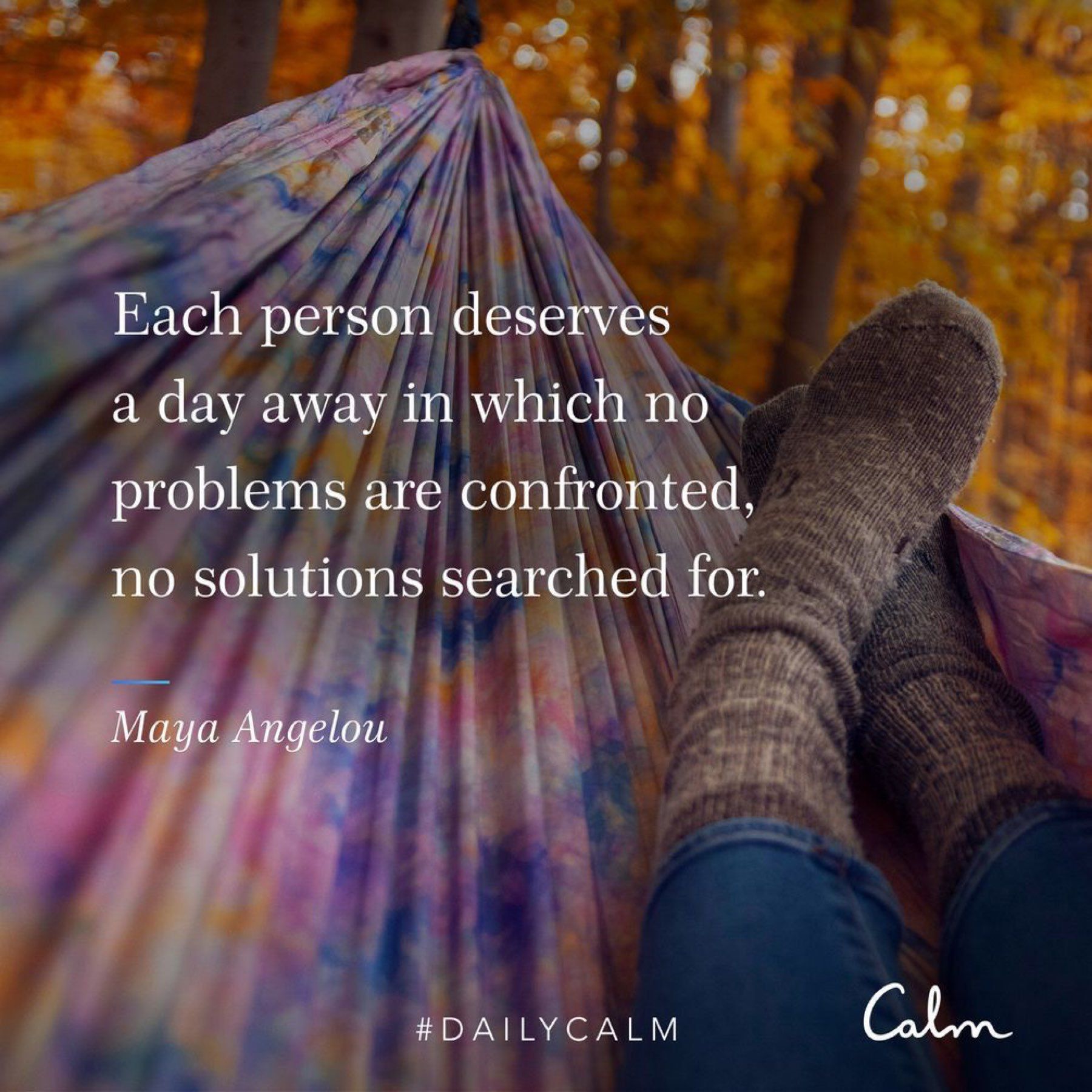
🧘🏻♂️ This has been exactly the point of my healing retreat. I need to discover how to incorporate this practice more regularly into my life. From my Daily Calm
✍🏼 I thought I would share some sketchnotes I took in church today that I originally posted on my Gospel Sketcher site. Church today, even in Spanish, was a great experience.

Our societal concept of a badge of honor for having endured suffering can be detrimental and even destructive at times.
As as society, we have an infatuation with suffering. I would like to think that it stems from a healthy, compassionate place. We feel intrinsically drawn to suffering, and our hearts go out to those affected. Obviously, this has been exploited in many different ways. Somewhere along the line, our perspective of the value of suffering has warped.
We now find ourselves in a situation where we glorify and revere people who have suffered. The problem is that, at times, these positive reinforcements create environments that foster and encourage unnecessary suffering. I wrote about one of these environments a few weeks ago: The plague of busyness.
Another environment primed for this warped perspective is the world, or industry, of sports. In nearly every game you watch, you will hear either the coach, the players, or the announcers discuss the adversity someone passed through. It’s almost like we believe that victory is not possible, or perhaps not valuable, unless it comes as a result of suffering and adversity.
I recently finished reading Man’s Search for Meaning by Viktor E. Frankl. I was inspired by his ability to endure great suffering, and still maintain a belief and perspective that life is valuable and worth living. Something he said feels particularly relevant:
But let me make it perfectly clear that in no way is suffering necessary to find meaning. I only insist that meaning is possible even in spite of suffering—provided, certainly, that the suffering is unavoidable. If it were avoidable, however, the meaningful thing to do would be to remove its cause, be it psychological, biological or political. To suffer unnecessarily is masochistic rather than heroic.
As I think about my own life, I want to remove the pursuit of these badges of honor. I want to stop trying to suffer in order to legitimize my experiences or achievements. I have value just as I am. I can allow myself to feel joy whether I earned it through suffering or not. There is no “earning it.” The badges are illusory.
I served as a missionary of The Church of Jesus Christ of Latter-day Saints in Romania for two years. During that time, we were allowed to send weekly emails, as well as periodic letters and packages to our family. We were also allowed two phone calls home per year—one on Christmas, and the other on Mother’s Day.
A major change to that policy was just announced today:
Effective immediately, missionaries may communicate with their families on their weekly preparation day via text messages, online messaging, phone calls and video chat in addition to letters and emails.
My wife sent me this article, and my first reaction was that I would have struggled with this policy. Here is an example of the flexibility being introduced:
We encourage missionaries to communicate with their families each week using whatever approved method missionaries decide. This may vary based on their circumstances, locations and schedules for that week. It is not expected that all missionaries will call or video chat with their parents every week. The precise manner of communication is left up to the missionary as he or she decides what will best meet their needs.
I am not sure that I would have been able to make judgment calls at that level. The official notice to leaders states:
When communicating with their families, missionaries should be wise in considering the duration of phone calls and video chats. In making these decisions, they should be considerate of their companions and keep in mind the purpose of their service.
This kind of decision-making requires a level of emotional maturity that is challenging to attain. As someone with OCD, which often manifests as excessive and unhealthy guilt, I would have had an extremely hard time making those kinds of decisions. I said to my wife:
I feel like this requires us as parents to teach our kids how to make decisions in a totally different way than I was capable of at that age.
I am excited to see the effect this kind of freedom will have on young people. (Missionaries from our church typically serve under the age of 25.) They are already in a formative period of life. Having the opportunity to learn the skills required for complex emotional judgment calls will be of great benefit to them. This level of ambiguity is a much more accurate reflection of the demands of real life outside of a sheltered environment such as a full-time mission.
I need to make sure that I become comfortable navigating these waters myself. Only then will I be able to pass these abilities on to my children.
There are many situations in life where everything is pleasant and rewarding, but getting started can still be next to impossible.
I went walking in the rec center the other day. I didn’t mean to go walking—I meant to play racquetball. At 7:52am, I sent this to my wife:
I got up this morning and thought I would come play racquetball. For some reason, I thought I would miss most of the people by coming early. Ha ha ha ha. How wrong I was. I guess I will be walking today.
As I went around and around the tiny track, I was struck by how great it felt to be walking. There was a little discomfort if I’m being totally honest, because it was my first day going counterclockwise. But overall, it was an immensely enjoyable experience.
While I was walking, the thought came to me, “This is so nice! What is it that stops me from coming?” I realized that I enjoyed every part of walking except getting started. There is so much inertia to overcome, but once I do, practically everything about the experience is pleasant.
So much of our lives follows this same pattern. Whether it’s connecting with a good friend, any form of exercise or meditation, or creating something meaningful, the struggle is in starting. When we realize and accept that, we are able to take steps to decrease our resistance. It can be as easy as laying out exercise clothes before going to bed. Or perhaps writing the first line of a blog post before stopping for the day. Or scheduling a message to go to a friend at a more opportune time. (Shameless plug—I made an iOS app to help you schedule text messages called Carrier).
Identify the things in your life that you enjoy doing and want to do more. Then consider how you can decrease your resistance to starting. Your future self will thank you.
🧘🏻♂️ This is not easy to do for some people, or for all people on some days. But especially today, it merits extra effort. From my Daily Calm
🔗 Fantastic article by @annie on how to tell the difference between haters and critics.
Found this nugget of gold that is applicable to all of life:
Keep an ongoing log of praise and positive feedback. Read it when imposter syndrome comes swooping in.
A few thoughts and stories about my experience visiting Mexico for the first time.
🧘🏻♂️ Fear holds us back from so much that is beautiful and wonderful in life. It is ok to face risk knowing that it might happen. Because we just might experience joy instead. From my Daily Calm

🧘🏻♂️ This is so hard. So hard. But often it is the only way to move forward. From my Daily Calm