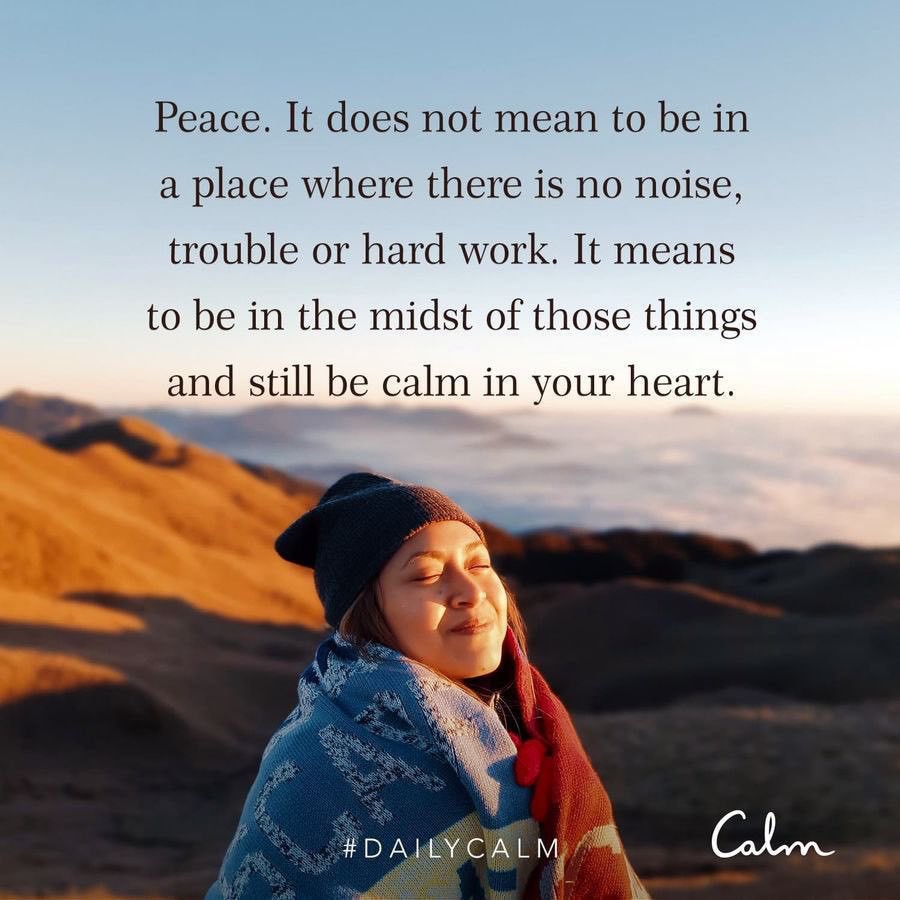
🧘🏻‍♂️ This is exactly what I am seeking to attain in my life right now. It involves an acceptance of the chaos and noise that is daily life along with a gentleness and compassion for myself and others. It is elusive but worth the effort.

From my Daily Calm

Peace is finding calm in your heart

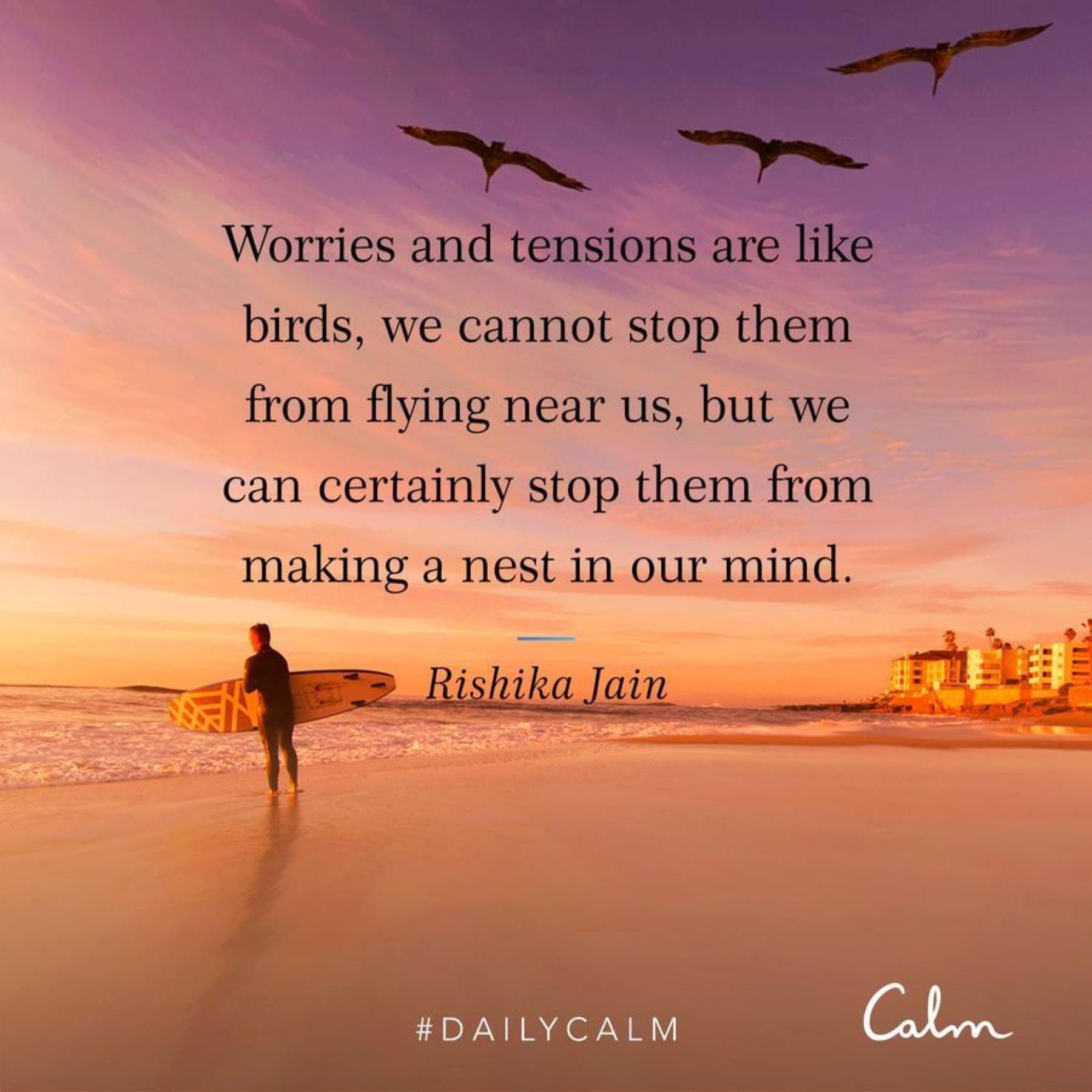
🧘🏻‍♂️ The best way I have found to combat worry and anxiety is to name it. When I call it out directly, I prevent the masquerade and am more able to let it slip away.

From my Daily Calm

Worries are like birds

📖 The Elements of Style

By William Strunk Jr. and E.B. White


🧘🏻‍♂️ What a delightful meditation this morning. The focus was on learning to rest the brain. This is a skill that seems just out of reach but also desirable and valuable.

From my Daily Calm

Take rest

📝 An open letter to THWoD

My thoughts on and appreciation for the delightful podcast, The Hilarious World of Depression.


To John Moe and co.,

Thank you. The work you have done in creating and continuing THWoD is truly life-changing. I began dealing with mental health issues in the summer of 2018. I browsed the podcast directory in Overcast looking for comedy shows, and stumbled upon THWoD. Great job on the name by the way. I was drawn in, and all of my many recommendations have been met with a smile at hearing the name.

As I listened to guests share their stories with mental illness, I found validation. As you have mentioned many times, one of the problems with mental illness is that it convinces you that are you alone, a freak, an aberration. Hearing that others felt the same gave me a new level of self-compassion.

The more I listened and progressed in my journey, the more I wanted to share. I finally had the courage to write my own coming out story with mental illness. I found the fear my brain fed me at sharing the personal details of my life was a lie. I received an outpouring of love and compassion, and many people shared their mental health struggles with me.

I recently returned to work after a couple months off for a medical leave of absence. I have tried to share personal details of my struggles with people who ask why I was out. And I have found that those conversations result in the most meaningful and authentic bonding experiences I have had at work.

THWoD continues to be a major part of my life. I tell almost everyone it is my favorite podcast right now. My kids were intrigued and perplexed when I told them about it. “Uh, Dad, I don’t think depression is very hilarious…”

It is clear this is a labor of love. You truly care about what you are creating and the impact it has in the world. John, I’m sure that it takes a toll on you to invest yourself in connecting with the darkest parts of people’s lives. I want you to know what a difference the show has made for me.

Here are some of my favorite moments:

Thank you again, and I wish you all the best as you continue your own mental health journey.

Ben Norris signature

🌀 Not a comedian

Comedian

It’s ok that I’m not that funny. Just because I’ve listened to comedians on THWoD doesn’t mean I have to be one.


I’ve mentioned a few times, and will again, that my current favorite podcast is The Hilarious World of Depression. Many of the guests have been comedians and have talked about dealing with their mental health through comedy.

The more I listened to comedians grappling with their mental health, the more I thought I should become a comedian too. I even told my wife that was my new life plan—to do stand-up comedy. It seemed like the logical next step. There was only one problem.

I’m not that funny.

I can get some laughs occasionally. I teach at a programming boot camp, and I often say something that is funny enough for the students to laugh. And that feeling! When I say something that connects with people, something inside me is filled I didn’t know was empty.

At the same time, I recognize that I am not naturally funny. My wife is, however. Without much effort, she says and writes things that make people laugh. As a child, I was never particularly funny. I knew people who were, but I was never comfortable enough with myself for that kind of attention.

This doesn’t mean I won’t ever try stand-up. I’m intrigued by improv. There seem to be many associated benefits, and it is scary enough that I think I should give it a go.

The key has been coming to terms with myself as I am now and being content with that. I don’t have to reinvent myself. I also don’t need to hold myself back from exploring desires or dreams that I have. If I want to pursue comedy, I can. But I don’t have to in order to be happy with who I am. I am valuable just as I am right now.


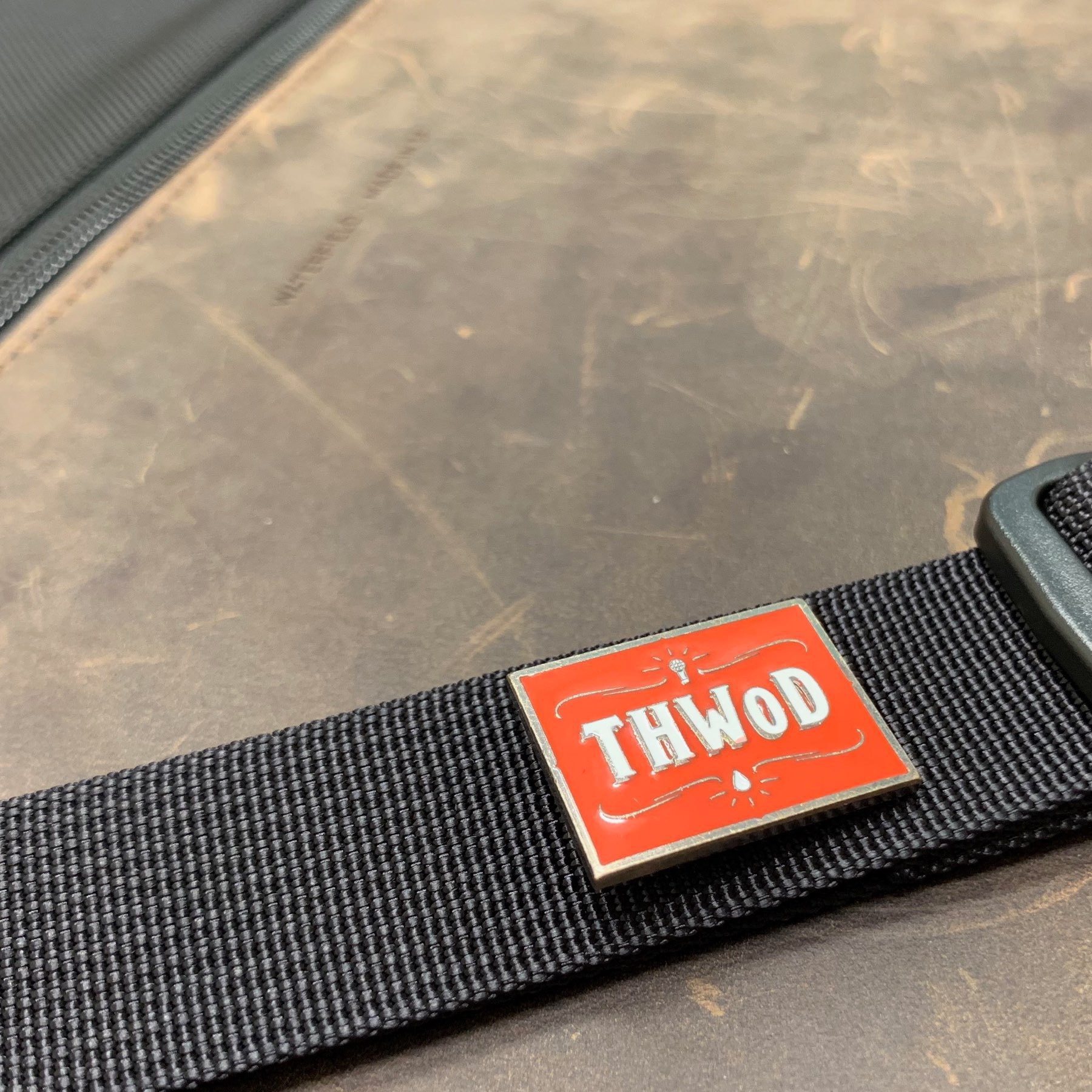
Excited to be sporting my new pin from @THWofD. Definitely my favorite podcast right now.

THWoD pin

Came back home last night after a week away to focus on treatment. It was so rewarding to see how excited the kids were. “Are you staying home? You are?! Hooray!!”


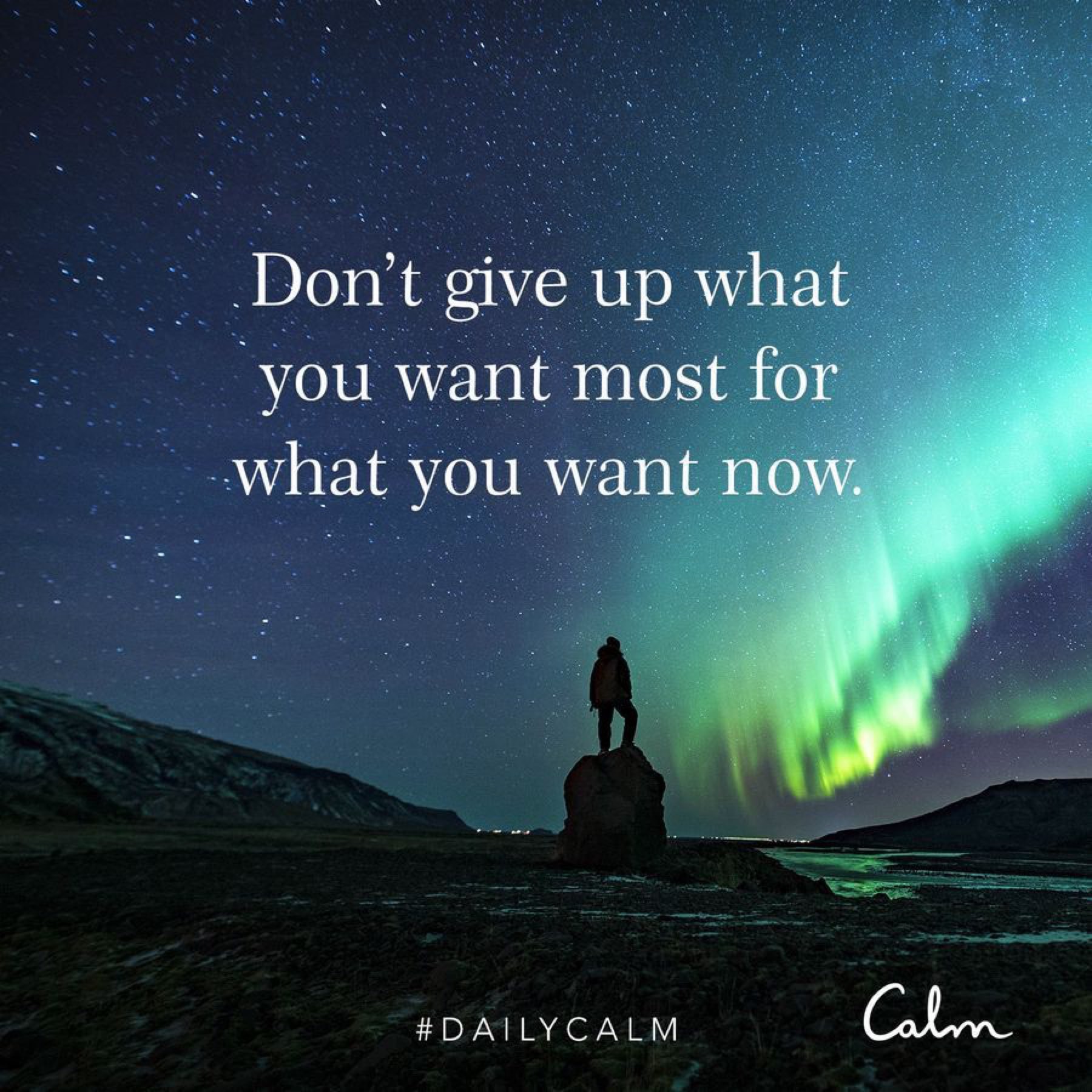
🧘🏻‍♂️ Learning the skill of impulse control is essentially the work on my ERP treatment. OCD makes it challenging for me to even identify the urges that come as separate from my acting on them. But, as with most things, my skill increases with practice.

From my Daily Calm

Don't give up what you want most for what you want now

🌀 Writing a series

Writing

A few thoughts on the process and effects of writing my first series, “What mental illness feels like.”


As I shared in the conclusion of my overview of my series on mental illness, this was a learning exercise for me. This topic had been on my mind for a couple months. Part of the reason was to better understand my own experiences. In that sense, it was a resounding success.

Another big part of me hopes that this series can be helpful to someone. As I wrote a couple weeks ago, I have come to realize that I belong to a special society of sufferers, and our membership numbers at least in the millions. There are so many people who are struggling to cope with crushing despair at learning they have a mental illness. Amidst that despair is also hope. We can learn to live well, even with mental illness as our companion.

Part of the power of fright is the risk of the unknown. When a topic becomes off-limits to discuss or even consider, it gains influence and momentum in our lives. We need to tear open the shutters and let in some daylight to see what we are actually facing. Mental illness festers and strengthens in darkness. When we reveal it for what it really is, we come to see that, yes, it is scary, but it is also faceable. Just as the prophet-poet Isaiah said of the devil,

All they shall speak and say unto thee, Art thou also become weak as we? art thou become like unto us? How art thou fallen from heaven, O Lucifer, son of the morning! how art thou cut down to the ground, which didst weaken the nations! They that see thee shall narrowly look upon thee, and consider thee, saying, Is this the man that made the earth to tremble, that did shake kingdoms; That made the world as a wilderness, and destroyed the cities thereof?

Isaiah 14:10,12,16-17

As we become more comfortable talking about uncomfortable things, those topics can metamorphose. We will probably continue to handle them gently, but we can handle them. One of the first skills that mental illness often steals is that of self-compassion. And so we need to borrow and learn compassion from others.

I loved the experience of exploring a topic in great depth over a series of posts, and look forward to the opportunity to do it again. In the meantime, I plan to continue posting regularly about mental health (💮), as well as other thoughts and feelings I have. I would be thrilled to hear from you with suggestions for future series, or thoughts on what has been helpful for you, or just about anything else. You can reach me on Micro.blog as @bennorris, or email me at ben@bennorris.org.


📖 On Writing

By Stephen King


💮 I finished my series “What mental illness feels like” today, and posted an updated conclusion. This has been my best writing—maybe not the most well-written, but the most vulnerable and therapeutic. I hope it helps others face the horror of mental illness with less fear.


💮 What intrusive thoughts feel like

Fernando

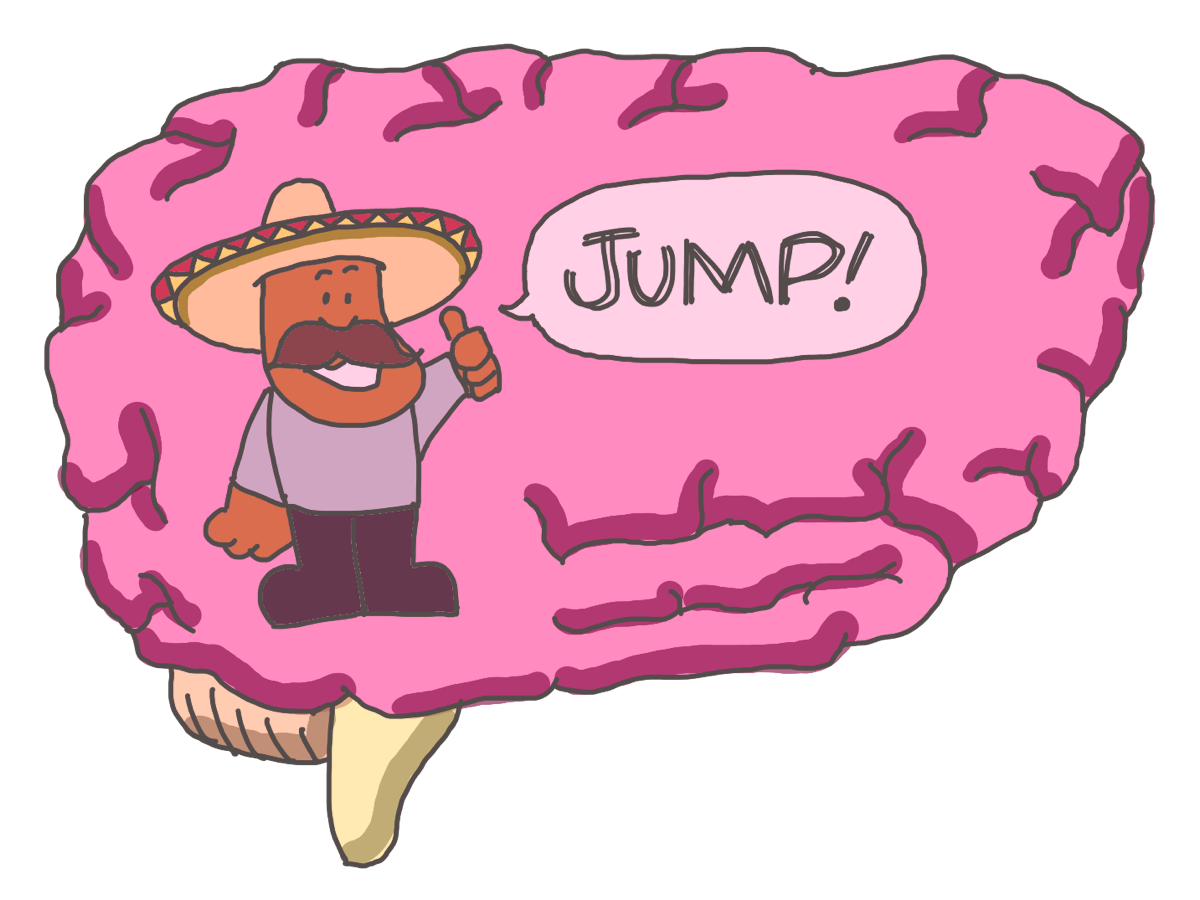
Having intrusive thoughts come in my mind is like having a terrible friend who keeps suggesting that I do ridiculous things. It can be hard at times to know who is speaking, but the more I get to know this friend, the better I can detect his voice.

Note: This is part of an ongoing series on what mental illness feels like for me. Read the introduction and associated disclaimers here.


I have lived with intrusive thoughts for most of my life. As I have learned more about mental illness, and specifically my diagnosis of OCD, I have come to realize that these intrusive thoughts are not normal. While most people will have bizarre thoughts come into their minds, they are usually able to shrug the thoughts off as strange and move on with their lives. For me, the thoughts are more persistent and visceral and often require great effort to resist.

Jumping for attention

There is a story from my youth that is both funny and sad, as so many things are. I am able to look back on it and laugh, even while I can see and feel the sorrow and pain it represented.

When I was in middle school, I decided that girls would like me more, or would at least give me more sympathy, if I was in a wheelchair. I came to the conclusion that I needed to break both legs for that to happen. I played the tuba in band, and I made plans to put my legs on the arm of the couch and smash the tuba through each of my shins. I remember so clearly thinking that the only hard thing would be doing the second leg after the first. I did not really consider how hard it would to come up with an explanation for the freak accident. I was the oldest child, and I asked my younger siblings what they would do if something happened to me while I was babysitting, and made sure they knew to call an ambulance.

I finally decided that the tuba was not the best option, and that instead I should jump off the roof. I thought and thought about it until I finally decided to act one day. I climbed up on the roof and jumped down to the ground while my younger siblings watched. The problem was, I could not force myself to keep my legs straight. I kept cushioning the impact. So I tried a number of times. I got it in my head that it would work better in the front yard instead of the back, so I moved there. The neighbors saw me and told my parents, and I got in big trouble. Somehow that story spread throughout my extended family, and I still get teased at times when we all get together for jumping off the roof. And I have to admit, it is pretty funny in a way.

Superpowers

Fortunately, my recent examples that involve violence to myself have all stayed at the thought stage. I have been able to resist them. I remember a few weeks ago going for a walk around the track on the upper floor of the local rec center. While I was walking, I had the clear thought come that I should jump over the railing down to the basketball courts below.

There was a big difference between my urge to jump as a teenager to get attention in a wheelchair, and my urge to jump off the track. This time, I saw myself jumping off and grabbing on to the back of a basketball hoop, and jumping horizontally between the backboard and the railing and the wall as I made my way down to the floor. It was so clear that I would be able to move just like Spider-Man.

Finding a name

The Hilarious World of Depression is one of my favorite podcasts lately. There was an episode where they asked listeners to describe ways in which they imagined their depression. One woman said that she given a name to her depression: Steve. This makes it much easier to respond to difficult thoughts, “No, Steve! That’s a ridiculous, horrible idea.” 1

While I was on a trip recently with my brother in Mexico, I was telling him about Steve, and that I had been thinking of something similar, but did not have a name yet. He suggested Fernando (make sure to roll and exaggerate the “r” and try for a good Mexican accent), and I laughed out loud. It felt like the perfect name because every time I say it or think it, I chuckle a little.

When my brother suggested the name, we were walking around the San Carlos bay, on the edge of the pier. It was so timely to get a name for my intrusive thoughts. I told him that I knew it was right, because I was using it that very moment. “No, Fernando, I should not push my brother into the water. That is a horrible idea!” He laughed and laughed and was glad that I was resisting that particularly intrusive thought.

Don’t feed the bears

One of the challenges of having intrusive thoughts is that they are often reprehensible and cause a powerful reaction. If I am not careful, the way in which I respond to them strengthens the power that they have over my mind. I am learning to be more mindful as they come; notice them, acknowledge them, and then realize that I do not have to feed them. I can just turn away and keep living my life.


  1. As I was researching the link for this episode, I found that the story was actually a reference to a previous episode that I had not yet heard. I had the treat of finding and listening to the original story of Steve in this episode. I even discovered that the woman in the episode, Bri Traquair, has OCD and came up with Steve as a way to deal with her intrusive thoughts. ↩︎


💮 What OCD feels like

Drums

Dealing with OCD is similar to how I imagine the Master’s experience in Dr. Who. The sound of drums is always present, although they may be soft at times and deafening at others.

Note: This is part of an ongoing series on what mental illness feels like for me. Read the introduction and associated disclaimers here.


In many ways, obsessive-compulsive disorder is the root of all of my mental illness, and is a topic that I expect to revisit many times. When I wrote my coming out story, I identified myself as someone with OCD. This does not define me, but it is also an integral part of who I am. I have mentioned previously that I am undergoing treatment at the OCD & Anxiety Treatment Center, which has been a fantastic experience. I wanted to capture some of my thoughts around my OCD near the beginning of my treatment, as I am sure that my perspective will change over time.

Buying a bag

A recent example serves as a good illustration of how I view my OCD, and the effect it has on me. A couple months ago, I wrote “Splurging on Patagonia gear”, in which I described my experience revamping my wardrobe. Part of the impetus of that change was considering traveling and wanting to be able to travel even lighter. I took a trip with my brother down to Mexico, and packed everything in a 21L backpack from Minaal, which I loved. But while I was there, I wished at times to have a larger bag to just throw things in as I changed rooms, or to transport without packing everything carefully. I found a bag online that looked like the ideal fit for me: the Patagonia Lightweight Black Hole® Duffel 30L.

Patagonia duffel bag

I have a real weakness for bags in general, and especially bags that can become small and pack in on themselves. This seemed perfect because it could be extremely small, even to where I thought I could fit it in my backpack when it was collapsed.

When I returned from my trip to Mexico, this bag started to dominate my thoughts. I had already considered it for hours, finding the right bag online and looking at the specs and watching the product videos. Part of my issue was that I had no travel plans in the near future, so there was not really a reason to get the bag anytime soon. But it would not leave my mind. On some days, I would think about it occasionally, and on other days, I had a hard time thinking of anything else. If my mind was not actively engaged in something, it would slip back to this bag.

Part of the struggle was that I had a plan to buy it. After shopping at REI, I had a members coupon to redeem at a certain date. I decided to use that to buy my bag when the time came. But on the day my coupon became valid, I found that they did not carry the bag I wanted. So for three days or so, I agonized over what to do. Finally, I decided that I had suffered long enough and I wanted relief and I ordered the bag straight from Patagonia. When it arrived, I found that it was actually bigger than I expected, and I am not sure if it will fit in my backpack. But I have already used it a couple of times and feel no buyer’s remorse.

Everyday OCD

The example with the bag is a little dramatic, and one that lasted much longer than most of my obsessions. My more nuanced diagnosis is Scrupulosity OCD, which feels like a fancy word for perfectionism. In many cases, including mine, scrupulosity includes a religious component, where your mind is convinced that you are offending God through many of your actions.

One of the real challenges with having this diagnosis is that it does not look like media-portrayed OCD. I do not have to flip the lights on and off a certain number of times, or wash my hands constantly throughout the day. (Although, to be honest, if I get something on my hands, I am often paralyzed and hold them suspended in front of me until I can wash so that I do not destroy anything.) What made this hard was that a number of mental health professionals with whom I met told me that I did not have OCD. One thing my brain craves is certainty, and so to not even know my diagnosis was excruciating.

In practical terms, my OCD most often manifests with my family. I spent my whole childhood anticipating two things: serving a religious service mission for my church, The Church of Jesus Christ of Latter-day Saints, and becoming a father. I read books and articles and prepared constantly. When I became a father, I found it was very different than I had imagined. The biggest difference was that I was not perfect at it. I frequently lost my temper, or failed to live up to some unrealistic ideal I had created for myself. And as a result, I would constantly punish myself emotionally. One time when we had three children, ages five, three, and two, I wrote in my journal that while I had sired children, I had yet to become a true father.

Over the course of the summer of 2018, my symptoms escalated to the point where I realized that I needed to seek help. This manifested most clearly in interactions with my wife, and sometimes my children. My emotions were very close to the surface, and when I perceived that I was failing, or disappointing them, it would often trigger a physical panic attack. It escalated to the point where I admitted myself to the hospital for a night. It was as if the drums had finally become too loud and too persistent to handle.

Fortunately, through medication and treatment, I am beginning to experience relief from my symptoms. I am learning what it will mean to live with OCD for the rest of my life. There are days when that realization is a crushing blow. But then I remember that I have already been living with it for practically my whole life. Now I will finally have some tools to manage it.

📖 Show Your Work

By Austin Kleon


🧘🏻‍♂️ This requires courage. But the rewards are so fulfilling and uplifting. Many of the things I need to leave behind are in my own mind. And great peace awaits as I do.

From my Daily Calm

I'm learning to love the sound of my feet walking away from things not meant for me

💮 What mental panic attacks feel like

ESPN Multicast

Mental panic attacks are the scarier version for me because they seem to come from nowhere. Often, my mind starts buzzing and filling up, even resembling the ESPN app multicast feature. Multiple streams are playing simultaneously, but only one has audio.

Note: This is part of an ongoing series on what mental illness feels like for me. Read the introduction and associated disclaimers here.


As I wrote before, I differentiate mental panic attacks from the more common variety I experience, physical panic attacks. In a physical panic attack, I am usually triggered as a result of intense emotions, and I can feel it building to some extent, or at least notice warning signs. Mental panic attacks seem to strike out of the blue, and thus are more uncertain and terrifying to me.

First episode

Even though I described them as being like an ESPN multicast in the introduction, it is not always this case for me. The first mental panic attack I experienced occurred while out on a walk with no headphones. I had been walking on a regular basis throughout the summer and fall last year, and one morning at the end of October, I was having trouble with my AirPods, so I just went walking without anything to listen to. As I neared the one mile point, I started to think that I needed to talk with my psychiatrist because my medications were not working out well. I am still not sure where my mind went, but I had the distinct thought, “I am not ok.” I decided to turn around and get straight home, even though I had planned for my walk to be longer.

Even later that morning, I could not remember the content of what was playing in my mind. I got to the point where the voices were shouting, and I felt completely overwhelmed. I wished that I had brought my headphones so that I would not be alone with my thoughts. I began to sing church hymns to myself as I walked, and one verse in particular stuck with me:

When dark clouds of trouble hang o’er us
And threaten our peace to destroy,
There is hope smiling brightly before us,
And we know that deliv’rance is nigh.
We doubt not the Lord nor his goodness.
We’ve proved him in days that are past.

We Thank Thee, O God, for a Prophet

I sang that over and over to myself until I got home and immediately crawled back in bed. My wife asked if I was ok, and my response was, “Not really.” She then asked if I could tell her about it, to which I replied, “Not yet.” She gave me a couple minutes and then told me she was scared and asked if I had gotten hurt or if I was having suicidal thoughts. I told her “No” and she just curled up to me and held me so I could fall asleep. A few hours later, she came back down and asked if I would let her in, and I was able to tell her about what had happened.

Multicast mode

One of my next mental panic attacks happened a couple months ago. I got up early one morning, and was getting ready to go to the temple. I could not find the right clothes, and started to get stressed and sat down in our closet. This is from my journal that day:

After a couple minutes, I reached up and grabbed my robe, turned out the light, and used it as a pillow to lay down for a bit. As I was laying there, I found that my mind started going like crazy. I had a few different trains of thought going loudly at the same time, and started picturing them like the ESPN app with multiple games at once. I started with two going on, and progressed to four happening all simultaneously. In the app, you can choose which one has audio at any time, but you can watch them all at once. That’s exactly how it felt. Then I heard some of the kids get up, and felt the stress that inevitably comes from them starting to get after each other. Luckily, I feel asleep.

Looking ahead

There are some similarities for me between physical and mental panic attacks. In both cases, I get to a point where I am overwhelmed by the sensations and cannot continue normally. They both exhaust me to the point where I need some recovery. They are both terrifying because I lose control of part of my body. And fortunately, the frequency of both is decreasing as I learn to manage my OCD more effectively.

I prefer to watch a single game at a time, whether in the ESPN app, or among the thought trains of my mind. That is not always my reality, and I am learning to not be so afraid when things do not go as I expect or intend. Moving forward, I may continue to experience mental panic attacks, but my goal is to step into them instead of recoiling and assuming the fetal position. Much of life is hard and scary, including my own mind at times. I am beginning to accept that.


💮 What physical panic attacks feel like

Obscurus

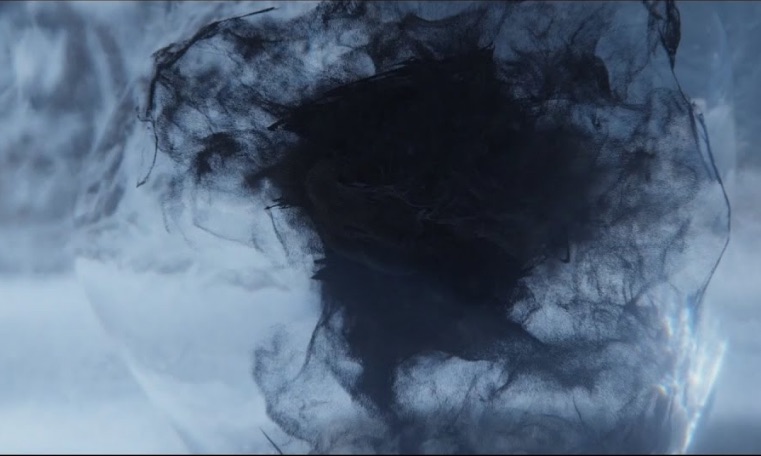
The best analogy I have found for physical panic attacks is the Obscurus discovered by Newt Scamander. It sits dormant inside of me, ready to burst out and wreak havoc and destruction at any time.

Note: This is part of an ongoing series on what mental illness feels like for me. Read the introduction and associated disclaimers here.


I have had a number of panic attacks over the past few months. There are two different flavors, or types, that I have experienced. I will cover the second type, mental panic attacks, in a later post. I think of first type as physical panic attacks. During one of those, I become physically debilitated, and essentially lose control of my faculties for a time. These are usually short in duration, typically one to three minutes or so, and then the recovery can be anywhere from half an hour to an hour.

As I have worked through the beginning of treatment at the OCD & Anxiety Treatment Center, I have found out that I do not meet the criteria for panic disorder. That means that my panic attacks are a function of my OCD, which also means that as I work on managing my OCD, I have a good chance that my panic attacks will decrease in frequency and severity.

In the movie Fantastic Beasts and Where to Find Them, we were introduced to the Obscurus creature, and its host, the Obscurial. When I watched the movie, I was struck by the similarities between Credence losing control of his Obscurus, and my experience of a physical panic attack. Physical panic attacks have always come as a result of a heightened and flooded emotional state. Often, I am dropped to the ground, even forcibly, so that I end up with bruises on my arms and knees. My breathing becomes rapid and shallow, and sometimes I am left screaming. I am usually overcome with a physical sensation of pressure and tightness. I clutch my arms and squeeze and feel as if I am holding on for dear life. When it passes, I am left completely weak, in mind and body. I feel totally exhausted.

On the Harry Potter Fandom site, we read:

An Obscurus was the manifestation of the repressed energy of a magical child (known as an Obscurial). Described as a “dark” and “parasitic” force, an Obscurus was created when the child in question consciously attempted to repress their talent or were forced to do so through physical or psychological abuse. This energy could manifest itself as a separate entity that can erupt in violent, destructive fury.

This further solidified the connection for me. The energy inside me that bursts out during a panic attack feels just like a separate, violent, destructive entity. I often feel like I am repressing it and pushing it back down inside me. The more I fear it, the more power it has over me.

Unfortunately, most of my panic attacks have occurred at home with my family. I have made sense of this as I learn what triggers them, and come to a greater understanding of the distortions in my brain surrounding my family. I often feel a deep sense of failure when I do not live up to my unrealistic and idealistic expectations of myself. I project a lot of disappointment on others toward myself, especially on my wife. This means that at times, I can be a difficult person to live with. In a household of six children, there are ample opportunities for patience to be stretched thin, and for me to make choices that are not in line with perfect parenting. This is particularly challenging when those choices can lead me to an emotional outburst and physical panic attack.

I do not know what the future of the Fantastic Beasts movies holds, and how things will go with Credence. I would like to think that he will learn how to control his Obscurus more so that he is able to live his life. That is how I see myself moving forward as well.

There will always (at least it feels like always at this point) be an undercurrent of risk that the beast inside of me could awaken and leave me writhing on the floor. But as I get to know it better, it loses some of its potency. And as I learn to manage my OCD more effectively, hopefully I will experience fewer and fewer attacks.


📖 Steal Like an Artist

By Austin Kleon


💮 What depression feels like

Ahch-To Pit

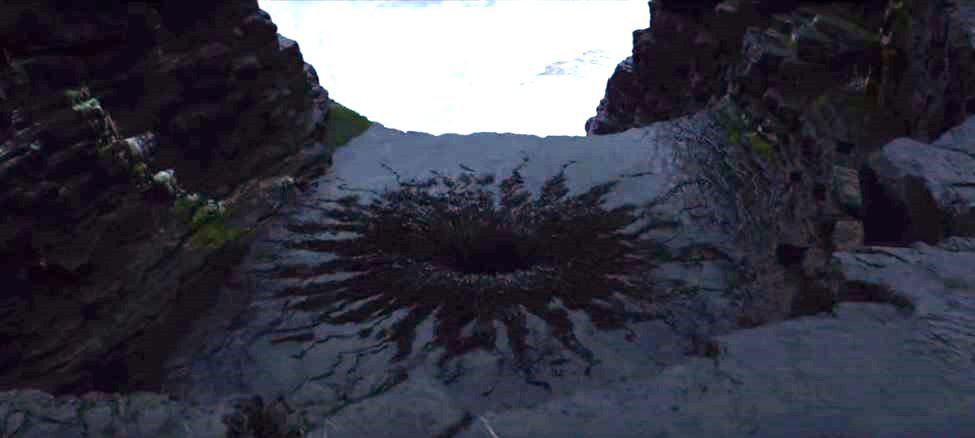
When depression is weighing me down, I feel like I am staring down the dark pit Rey faces on the island of Ahch-To.

Note: This is part of an ongoing series on what mental illness feels like for me. Read the introduction and associated disclaimers here.


Early in my experience with mental illness in the summer of 2018, I was trying to explain how I was feeling to my wife. I had the idea to show her a clip from Star Wars: The Last Jedi. The first time Rey learned from Luke Skywalker about the Force, she saw various aspects of the island, and the balance that existed. She saw the pit on the island, and sensed the great darkness it represented. For a few seconds, her perspective was poised over the pit, looking down into the depths as it looked larger and larger.

My diagnosis does not include clinical depression. So when I speak of my experience with depression, it is in the context of depression associated with OCD and anxiety. Many mental illnesses are related—feeling anxious leads you to a mental state that is discouraging and feels depressive.

With that disclaimer, I will state that I have felt the crushing effects of depression. There have been many days since I started to grapple with these issues that I have felt that I was floating in the air above that dark pit, ready to plunge down at any moment.

Most of the time that I recognize the pit in my mind, it is accompanied with feelings of hopelessness. When I am staring down into the darkness, it feels like it will never end. My mind revolves around the darkness, and starts telling me that there is no light at the end, and I will never escape these feelings. Those are dark days.

Water fountain

In the movie, the scene climaxes with a huge fountain of water spurting up through the pit like a geyser and Rey collapsing on the rocks. This seems like it would be the perfect end to one of my depressive episodes. No matter what, I know that I am going to be exhausted, and left gasping for air, either physically or mentally. But to have the sweet cleansing rush of water course through the last bits of my mind feels like the best possible outcome.

This cleansing purge is not always what comes to me at the end of a depressive episode. When it does come, it is often in the form of writing. I am able to process the overwhelming thoughts and feelings I am having through getting them out on the page. As I write, and read what I have written, I am able to identify destructive patterns and distorted thoughts that I can confront with compassion and truth. The reality is that things are rarely as bleak as my mind sees them. And nearly always they are more nuanced. I have a tendency to see everything in black and white, and the more that I can see in between two extremes, the healthier my mind can be.

The most important thing for me to remember is that any episodes, or even days, in which I am staring down the pit will come to an end. The darkness does not last forever. If you find yourself floating above a fictitious island, looking down in a dark pit, remind yourself that this, too, shall pass.


💮 What anxiety feels like

Arc reactor

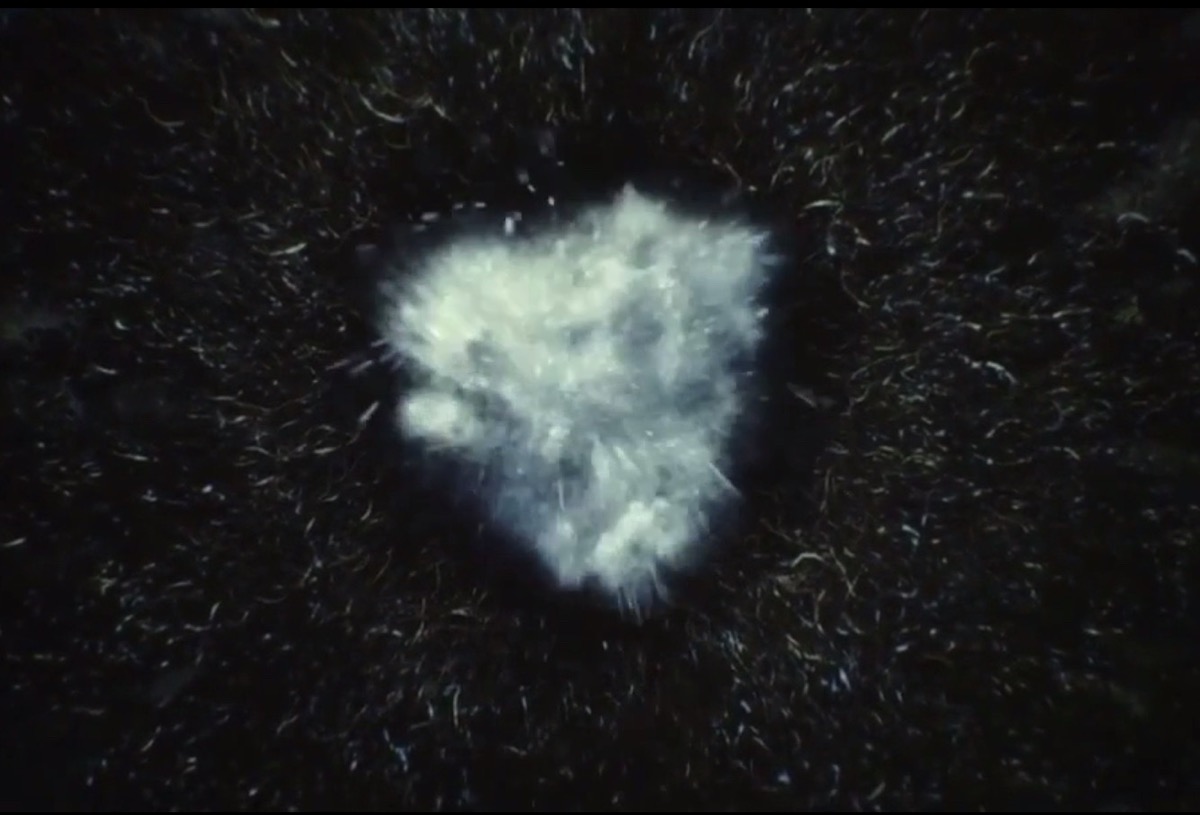
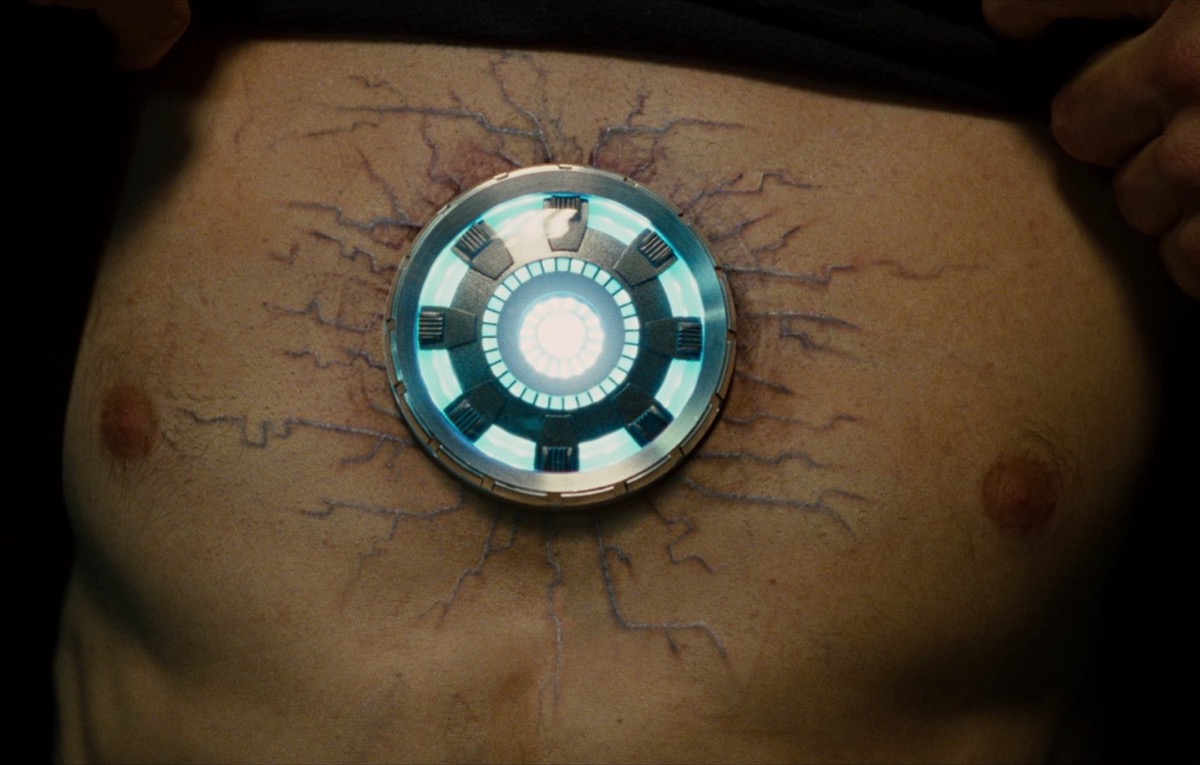
Anxiety for me is like the arc reactor, as shown in Iron Man 2. At times, it pulses and the energy it emits ebbs and flows. But it is always spreading poison throughout my body.

Note: This is part of an ongoing series on what mental illness feels like for me. Read the introduction and associated disclaimers here.


As I wrote about in my coming out story, I only became aware that I was affected by mental illness in the summer of 2018. One of the first physical symptoms that I noticed was a burning in my chest. I remember so clearly the day when I realized it was present. My wife had arranged for us to have a nice date together, and we went to the carnival for the night. We had a lovely evening. I had started therapy by that point, and when I realized that there was a sensation in my chest, I felt almost betrayed by it. My thinking was that because I was in therapy and I was working to make things better, I shouldn’t be feeling this now. It felt like I was doing worse than before starting therapy. I chuckled at myself with my wife, and came to the conclusion that the feeling had been in my chest for a long time, but I had learned to ignore it. I felt worse now because I was finally becoming aware of how I was actually feeling.

Since that time, I have noticed the same burning sensation come and go. In religious terms, sometimes you hear of a “burning in the bosom” which is not what I was experiencing. I struggled for a long time to find the right analogy to help me to understand the feeling I was having. Finally, I watched Iron Man 2 again, and saw the early arc reactor. In the movie, this is the device that gives Iron Man his power, but it is also killing him as he uses it because it is spreading poison throughout his body. It hit me that this was nearly the exact way in which I experienced anxiety. The analogy breaks down if taken too far, with the most glaring discrepancy being that I do not believe I derive my power from my anxiety.

Having a mental image to associate with the feeling that was sitting in my chest made it a little less scary. Instead of having a small monster inside my chest writhing and clawing to get out, there was just a small, powerful disc of energy. The disc would glow and pulsate at times, and the feeling would be stronger, and at other times it would lie dormant. But since I noticed it that day in the carnival, there has not been a single day without it.

The poisonous aspect resonated with me as well. When the arc reactor is powered up and emitting energy the most strongly, it is causing physical harm and side effects. The same thing happens for me. When my anxiety flares up, it often has immediate physical symptoms. I will write more about the most of extreme of those separately in How physical panic attacks feel. But long before the panic strikes, my body is noticeably affected. My heart starts to race, and my breath gets more shallow, as if my chest is not capable of expanding fully. My judgment begins to be impaired, and my temper shortens. Sounds startle me much more easily. Patience wanes, and I feel as if I am losing some control of my executive functions. In many ways, this is easy to understand or explain, especially after listing a number of the symptoms. This is what happens when your brain gets in a fight-or-flight mindset, which is exactly what is happening. I am being flooded with adrenaline, and responding to threats that I perceive.

Learning to live with this anxiety reactor is remarkably similar to Tony Stark’s work. Left unchecked, this is going to cause serious damage to me and my life. In Tony’s case, he had to invent a completely new element to create another model of the arc reactor. I am unlikely to build a centrifuge in my basement and synthesize an element, but I am finding ways to adjust the arc reactor with which I will keep living. One of the reasons that my brain goes into fight-or-flight is that I have often taken steps to soothe my brain and address the threat, which strengthens the perceived reality of the threat. I am learning to notice the pulsing of the arc reactor, and instead of firing up my hand cannons, just breathe and acknowledge it.

Essentially, I am seeking to downgrade the model. I want a less powerful arc reactor. I do not think that I will ever be completely without one. But I am hopeful that I will learn to live with it more peacefully and calmly.


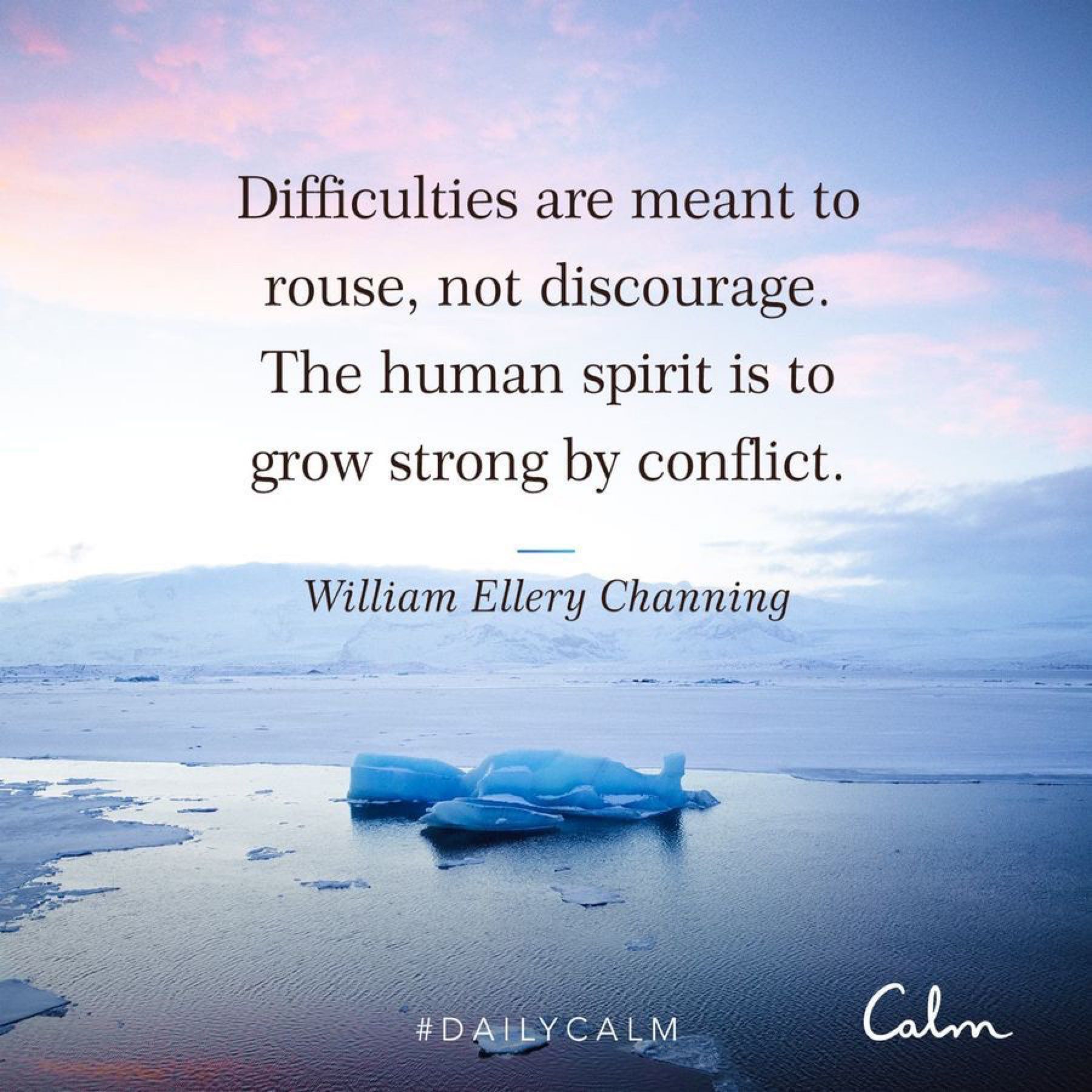
🧘🏻‍♂️ What a great perspective. This feels even more important to remember when many of the difficulties come from yourself. Even those are meant to help you grow. From my Daily Calm.

Difficulties are meant to rouse, not discourage

🎙 Answering Questions

An exploration of the phenomenon of considering a topic for the purpose of answering someone else’s question instead of just learning for yourself.

Links

💮 Coming out (tl;dr Hi, I’m Ben, and I have OCD. 👋)

What is OCD?

The OCD and Anxiety Treatment Center

Dialectical behavior therapy (DBT)

Black and white thinking (Splitting)


💮 What mental illness feels like

A series with an inside look at the effects of mental illness and the way that I have made sense of it in my life.


Introduction/disclaimers

For a couple months, I have wanted to write about my mental health, and the different disorders or symptoms that I have faced. I continue to improve, and am currently working in an intensive outpatient program for my OCD. In a glorious cycle, as I become better at facing my mental illness, I am able to be more objective and detached about my experience, which helps me face and handle it better. So, while I do hope that sharing my experience can be helpful for others to recognize what they may be facing, this is primarily a selfish series in which I want to better understand myself and what I’m going through.

This is further a selfish series because I want to capture the current state of my thoughts around mental health. I can already feel myself bending and changing in my treatment. I know that I will progress and see things, including myself, differently as I move forward. Writing my experiences now preserves this fragile part of my mind, just like a before picture. I do not know if this is a series I will revisit in the future, but I already want to read it again in six months when I am a different person.

My mind requires me to issue a few disclaimers. I am not a mental health care professional. Essentially, I don’t know what I’m talking about. I may mix up terminology. I will almost certainly speak about disorders and symptoms incorrectly. I come to this as a fellow traveler on the road to discovery, seeking merely to share my observations of the journey, not as a sage atop the mountain of mastery and understanding. I do not speak definitively on any of these topics. Instead, I speak highly subjectively of my experience with them. If this is triggering for you, leave it. If it is offensive to you because of how wrong I am, I apologize. Try your best to let it go. If it is helpful to you, find a way to pay it forward and extend care and compassion to people in your life. I take no responsibility for what you will do with what I say. I simply seek to share my story.

Articles

Conclusion

Writing this series has been a wonderful experience for me. I have found the process to be therapeutic as I confront different dark realities of my mind and shine light on them. It has also been helpful to get concrete examples to better understand what I am experiencing. When I notice certain feelings in my body, I can now recognize them more easliy. As they have become more familiar, they have lost some of their danger and mystique.

I mentioned in my microblog post that this has been my best writing. As I alluded to, I mean that in a couple senses of the word. First, I feel the most proud at having written this series. It was deep and meaningful to me, and I felt vulnerable in sharing these private thoughts and experiences, and I celebrate that. This is the kind of writing I want to do more of. Second, this was immensely helpful to me to process and concretize my perceptions. I understand myself better, and feel a little more self-compassion.

Everyone has been or will be touched by mental illness. My hope is that we can have a more open and honest conversation about our experiences. Only in this way can we encourage the people we love (including ourselves!) to get the help that we so desperately need. I am so grateful for the support structure I am blessed to enjoy, particularly for my wife. And I hope that I can help others and pay forward some of what I have received.


📖 From the Earth to the Moon

By Jules Verne